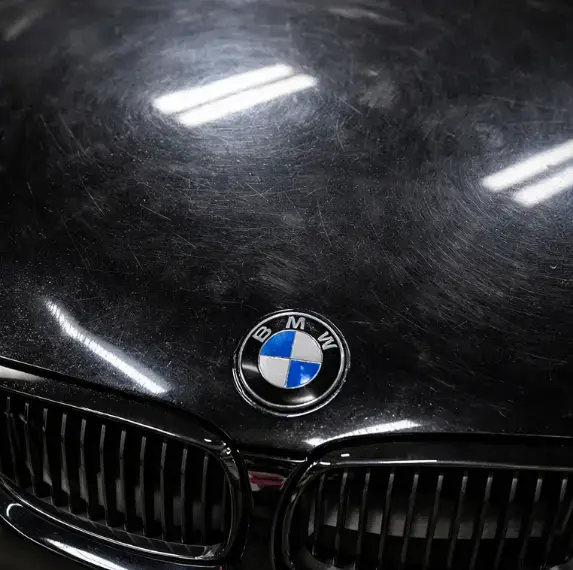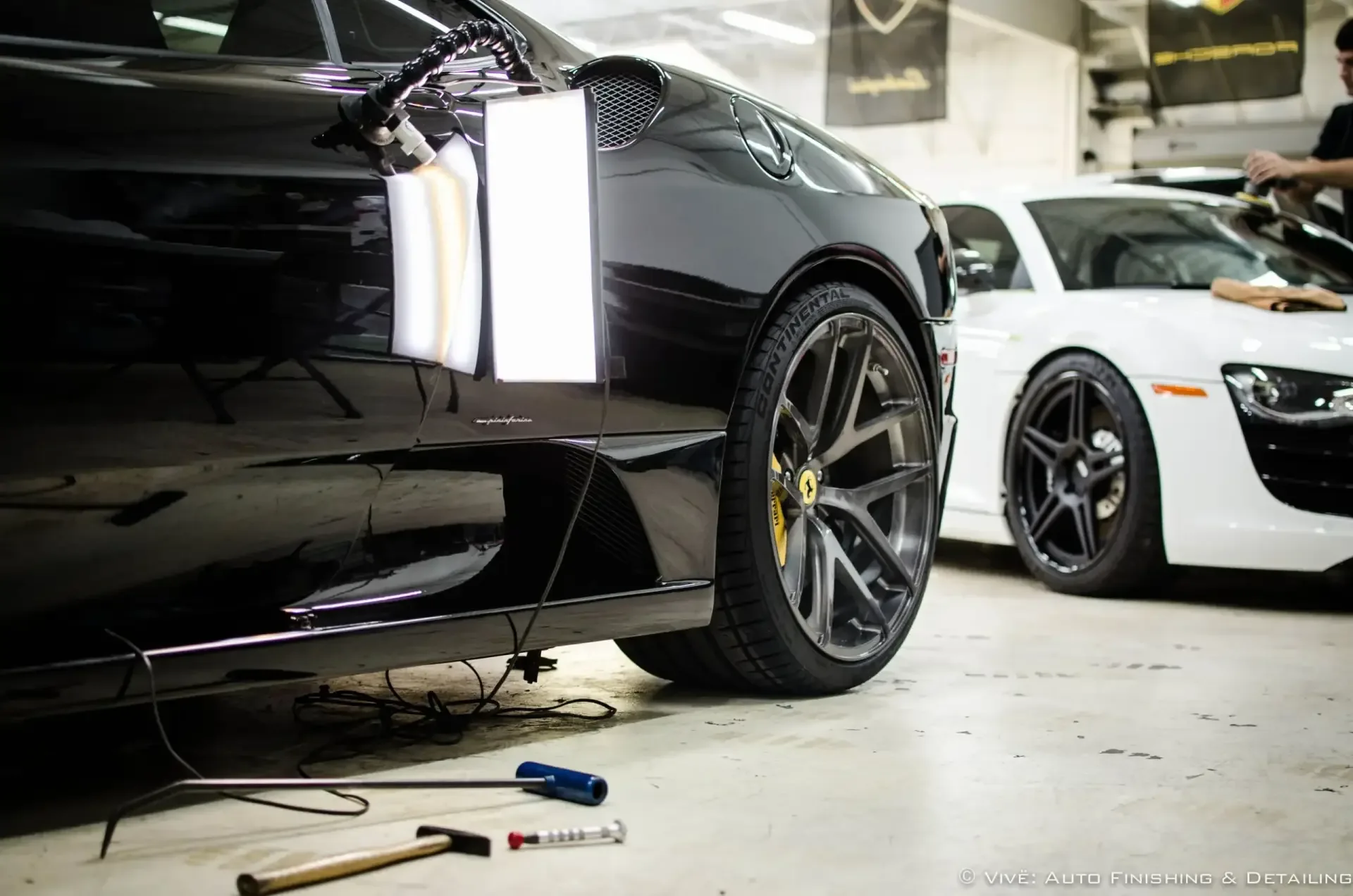
“I went through a car wash. Now it’s scratched.”
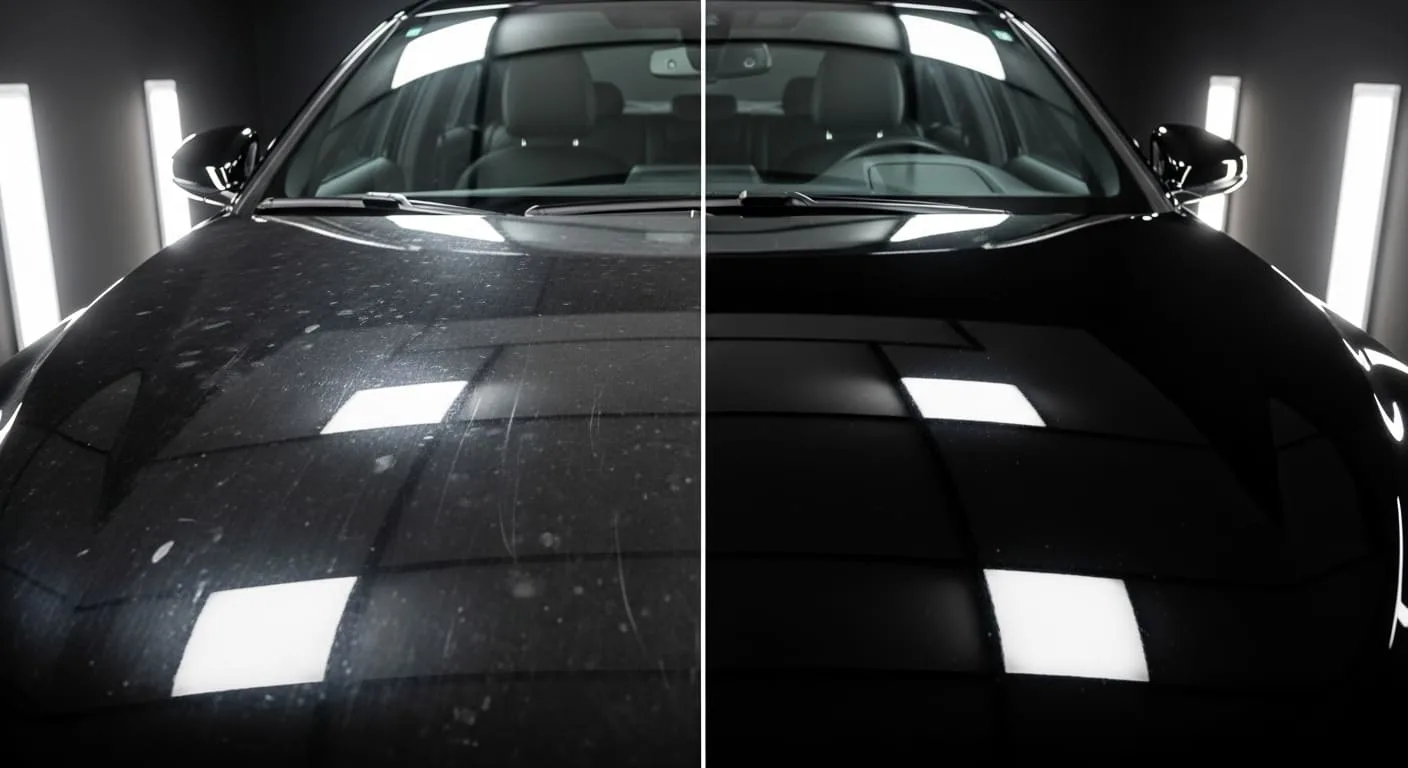
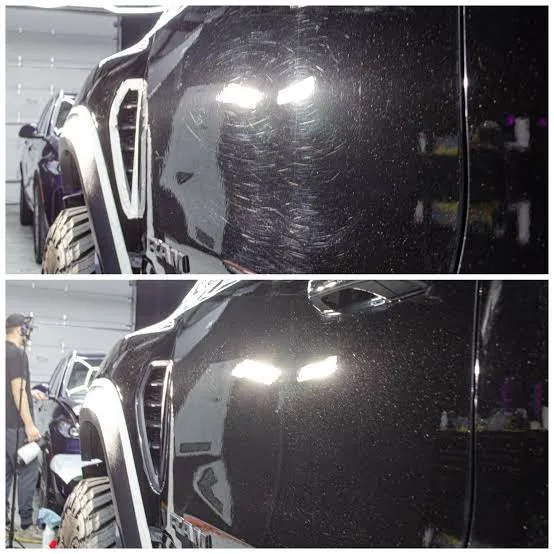
Brushes and recycled water drag grit across the paint in circles. In the sun it shows as a spider web. Those scratches sit in the top of the clear, which is exactly what correction is for.
How swirl marks, car wash scratches, trail scratches and dull paint actually come out. Light cut, abrasive cut and wet sanding, explained by the crew that has spent 20,000+ hours doing it.
How swirls, car wash scratches and dull paint come out: light cut, abrasive cut, wet sanding.

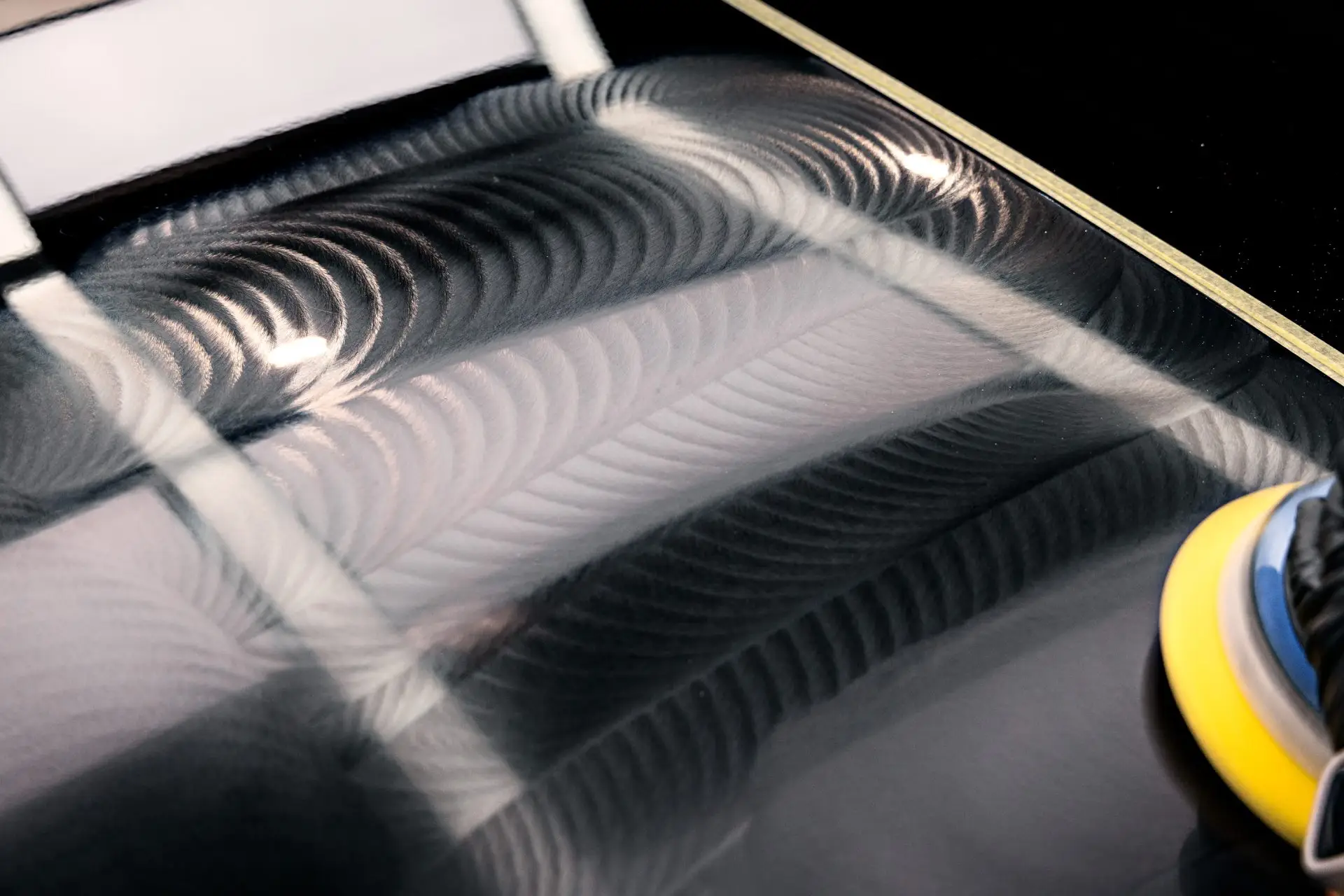
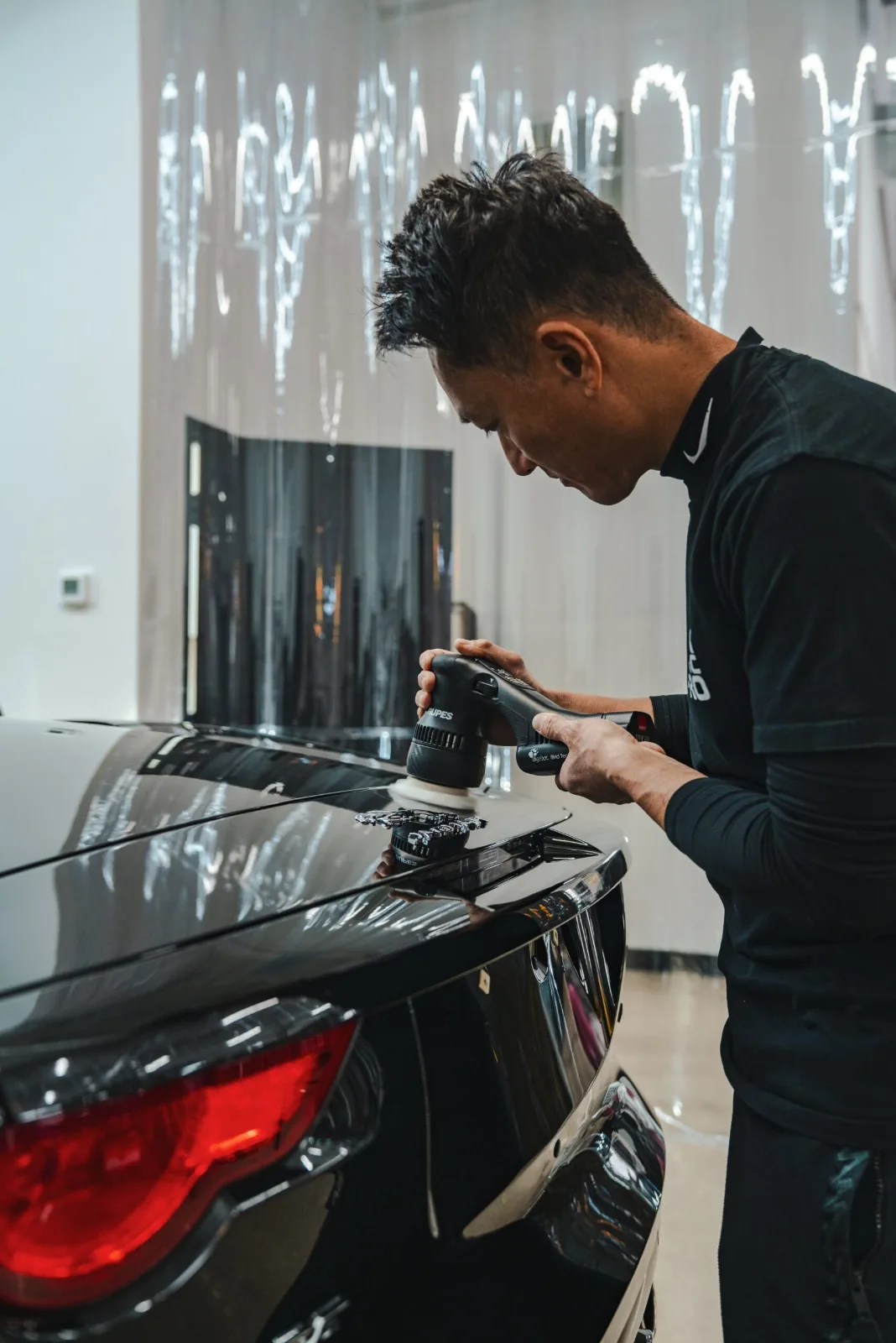
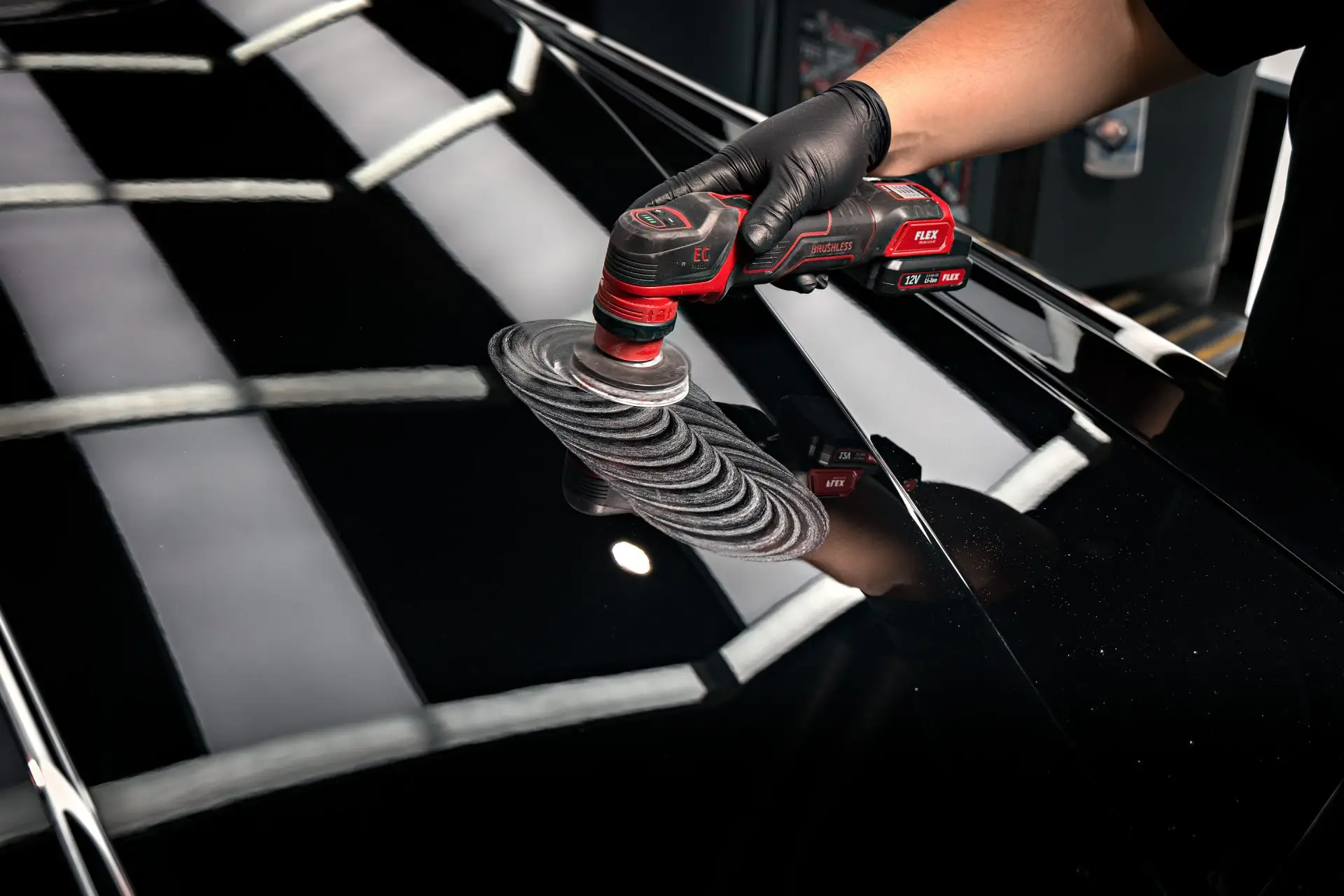
Paint correction is machine polishing that levels the clear coat down to the bottom of the scratches, so they are gone instead of filled with a glaze that washes out. A 1-step is a light cut, a 2-step is an abrasive cut followed by a finishing polish, and a 3-step adds wet sanding for scratches the polisher alone can’t reach.
Most people find us after one of these. Here’s the level each one usually needs. The light decides the final call, not the photo.

Brushes and recycled water drag grit across the paint in circles. In the sun it shows as a spider web. Those scratches sit in the top of the clear, which is exactly what correction is for.

Trail pinstriping from Rampart Range or Gold Camp Road brush. Most of it is shallow and comes out.

Fine marring and UV at 6,035 ft flatten the gloss.

Do the fingernail test below first. A key mark in the clear can be leveled; one into the color can’t.

Hard water left to dry and droppings baked on in summer etch into the clear. Winter de-icer leaves a film that dulls everything. Shallow etching is a Step 2. Deep etching that a polisher can’t level is a Step 3.
Run a fingernail across the scratch at a right angle. Doesn’t catch: it’s in the clear coat and correction will take it out. Catches slightly: it may still be in the clear, and that’s wet sanding territory, only after a paint gauge reading. Catches hard, or you see white, grey or bare metal: it’s through the clear, and the honest answer is touch-up or paint.
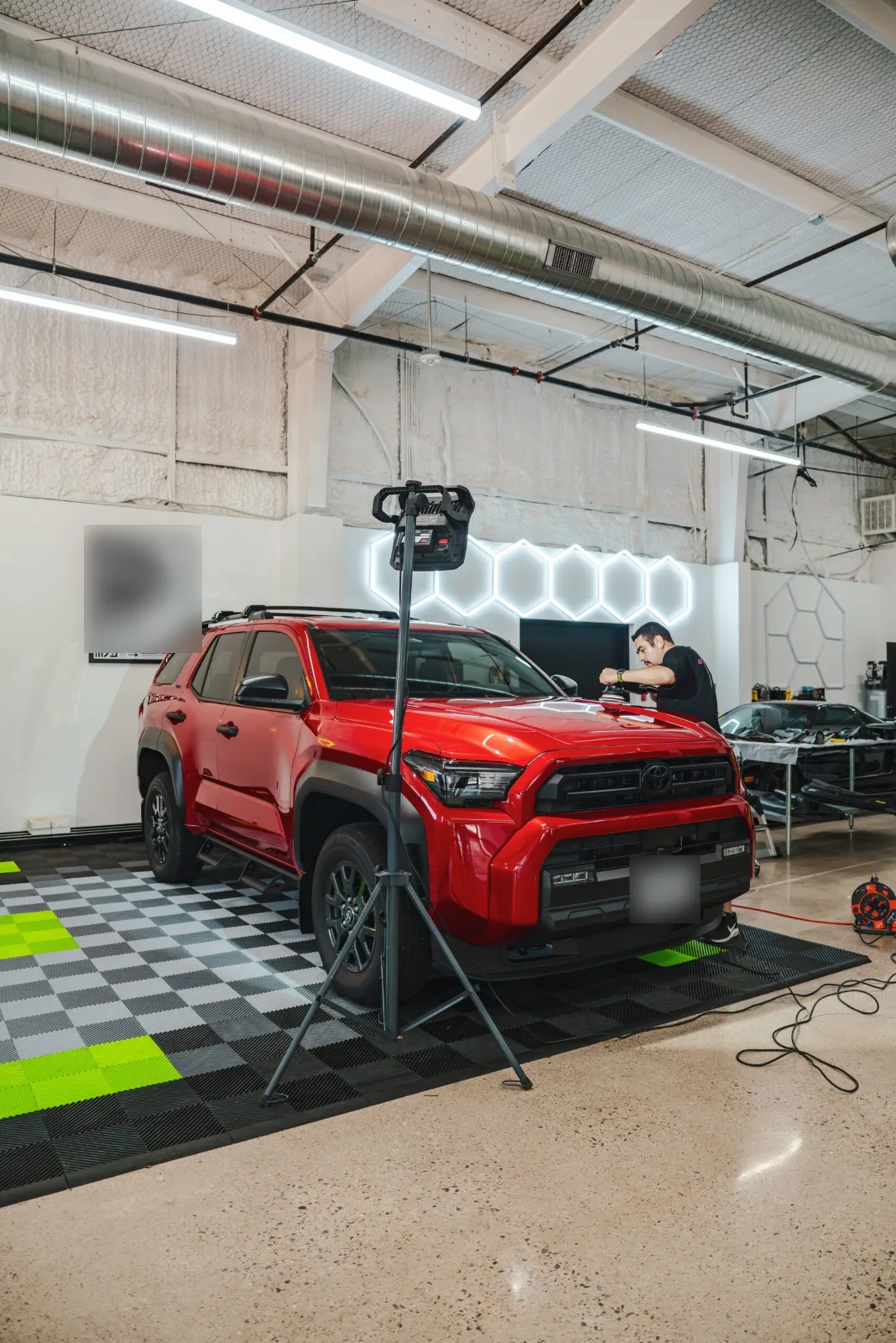
Most of the result comes from the prep. Skip it and the polisher grinds grit into the paint you’re trying to fix.

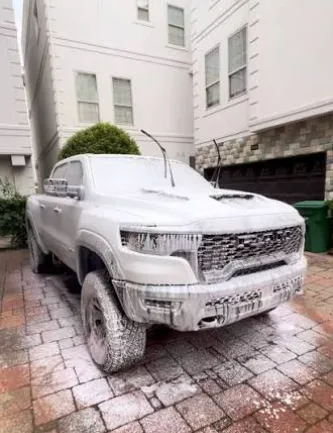
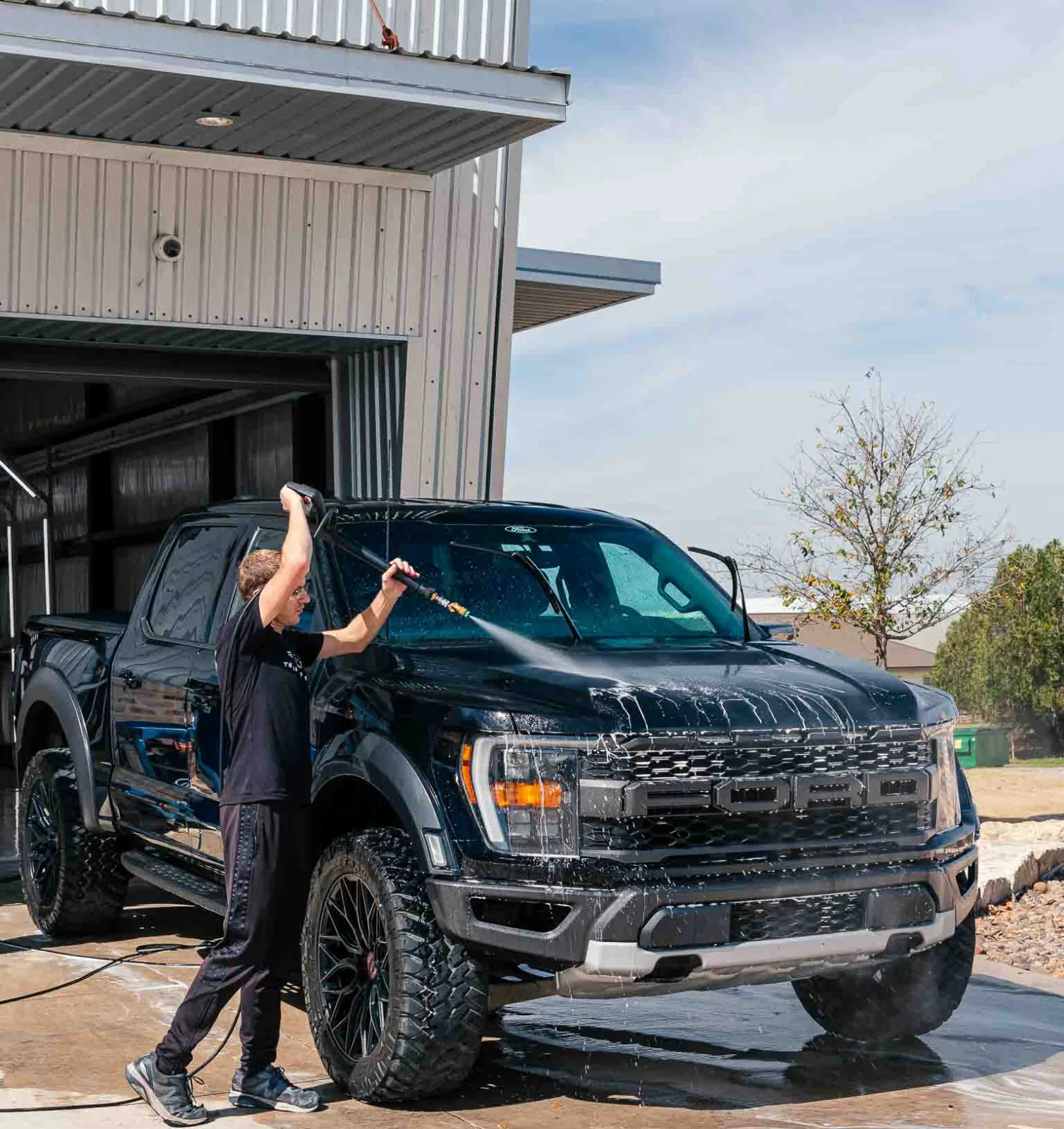
Foam soaks the dirt loose first, then a two-bucket hand wash. Nothing gets rubbed dry.

An iron remover dissolves embedded brake dust and rail dust, then tar and road film come off. On I-25 trucks this step bleeds purple.

Clay on plenty of lube pulls out what chemicals leave behind. Paint should feel like glass in a plastic bag before polishing.

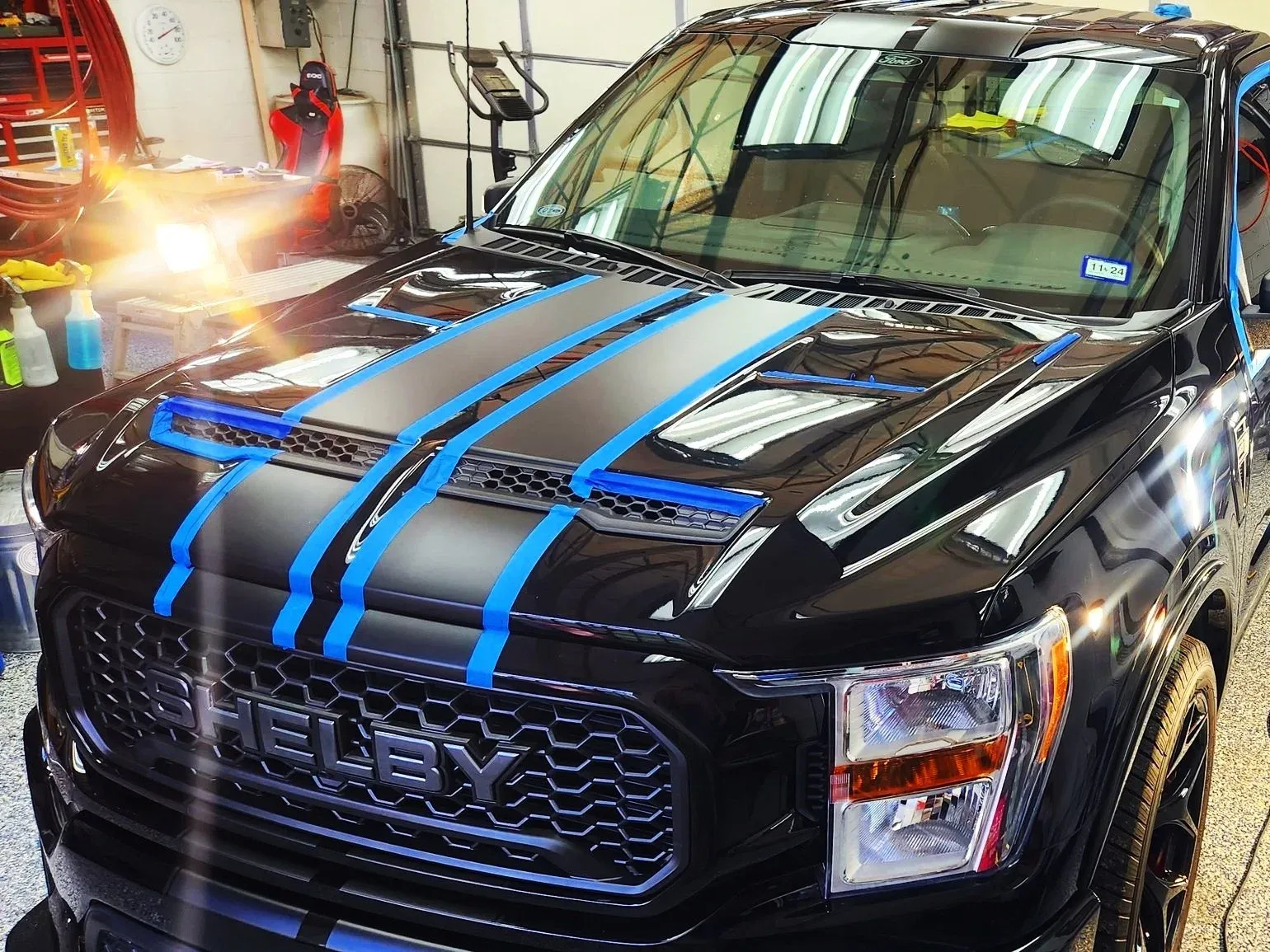
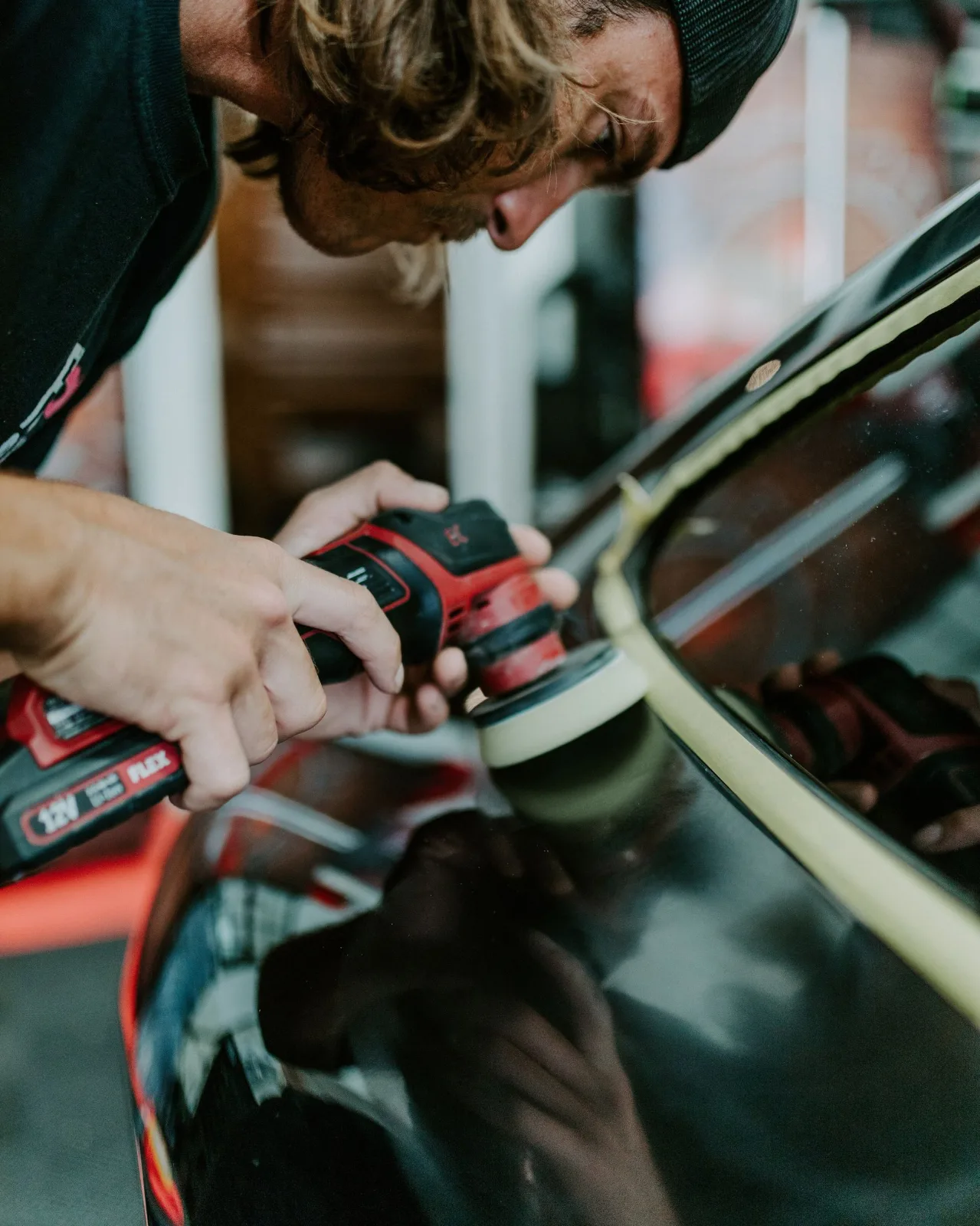
Trim, badges, stripes and sharp body lines get taped. Edges have the thinnest paint and burn through first.

A paint thickness gauge on every panel. Low readings mean a past correction; high readings mean a repaint. It decides how far we can go.

One small section with the least aggressive pad and polish that might work. Only step up if it doesn’t.
Each step removes more clear coat than the one before, so you stop at the lowest step that fixes the paint. That is the whole philosophy.


| Step 1 · Light cut | Step 2 · Abrasive cut | Step 3 · Wet sanding | |
|---|---|---|---|
| What it is | One polish, one pad | Compound, then finishing polish | Wet sand, compound, polish |
| Best for | Haze, dull paint, light wash marks | Car wash swirls, light scratches, trail pinstriping | Deep scratches in the clear, orange peel, deep etching |
| Defects removed | 50–60% | 80–85% | 95%+ |
| Clear coat removed | ~1–2 µm | ~3–5 µm | ~5–10+ µm |
| Paint gauge | Recommended | Recommended | Required |
Polish oils make paint look better than it is. These three steps tell the truth and keep the result.

An IPA-based panel wipe strips the oils. If swirls come back after it, the polish was hiding them, and the panel goes back under the machine.

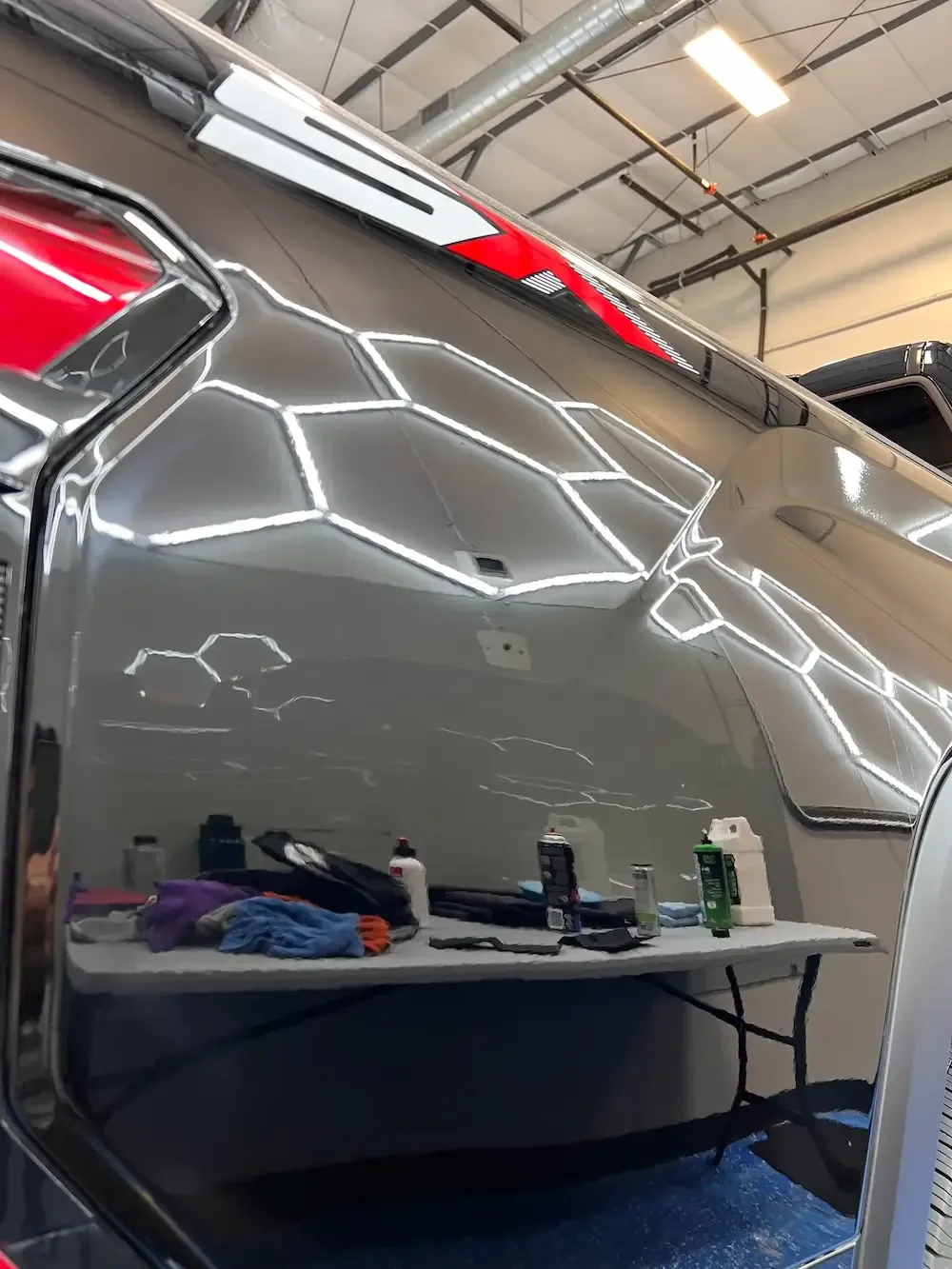
Overhead, handheld and a single hard light from the side. The one that shows the most is the one that counts.

We would rather you learn it properly than buy a bottle that promises everything. The rules we hold ourselves to:
At 2725 N Nevada Ave we inspect the paint with you standing there and recommend the lowest step that fixes it, even when that’s the cheaper one. In the shop, in controlled light. Send a photo of the panel in direct sun, or text (719) 517-7220.
Coating the car? Correction is already in every Gtechniq coating price.
Paint correction is machine polishing that removes swirl marks, scratches, haze and etching by leveling a microscopic layer of the clear coat down to the bottom of the defect. The damage is removed, not filled with a glaze or wax that washes away.
A 1-step is a light cut: one polish on one pad for haze and light wash marks. A 2-step is an abrasive cut with a compound, then a finishing polish to remove the haze the compound leaves. A 3-step adds wet sanding before the compound and polish, for scratches and texture that a polisher alone cannot level.
Yes, in most cases. Automatic car wash brushes leave fine circular scratches in the top of the clear coat, which is exactly what correction removes. Most car wash damage comes out with a 2-step.
Usually. Trail pinstriping from brush on forest roads like Rampart Range or Gold Camp Road is mostly shallow and comes out with a 2-step. Deeper lines that catch a fingernail may need wet sanding, and a few may be through the clear.
Only if the key mark is still in the clear coat. Run a fingernail across it: if it does not catch, correction will remove it; if it catches slightly, wet sanding may level it after a paint gauge reading; if it catches hard or shows white, grey or metal, it needs touch-up or paint.
Dull paint is usually fine marring from washing plus UV and environmental fallout scattering the light. In Colorado Springs, high-altitude sun, hard water and winter mag chloride all add to it. A 1-step or 2-step correction brings the gloss back in most cases.
It removes a very small amount: roughly 1 to 2 microns for a light cut, 3 to 5 for a 2-step and 5 to 10 or more where wet sanding is used, out of a clear coat typically 35 to 50 microns thick. Measuring with a paint thickness gauge and choosing the least aggressive step that works keeps it safe.
Wet sanding uses very fine sandpaper, usually 2,000 to 3,000 grit, with lubricant to flatten the clear coat down to the bottom of a deep scratch, orange peel, a run or dust in the clear. It is always followed by compounding and polishing, and is only done on panels with enough clear coat measured.
The correction itself is permanent: removed scratches do not come back. New ones come from washing, so results last as long as the car is washed properly. A ceramic coating or paint protection film keeps corrected paint looking that way for years.
At ST6 Detailers, 2725 N Nevada Ave, a 1-step light cut starts at $399, a 2-step at $599 and a 3-step with wet sanding at $899. Correction is included in the price of every Gtechniq ceramic coating.
Yes, with a dual-action polisher, clean pads and patience. Start with the least aggressive polish on a test spot, work in the shade on cool panels, tape the edges and never wet sand without a paint thickness gauge.
No deposit to book. You pay after the work is finished and you have looked at it.

Dana Starr has been detailing in Colorado Springs for 17+ years. He runs this shop with his two sons and a crew he trusts. Every job gets looked at before it goes back to you.
Gtechniq AccreditedAccredited installer in El Paso County