
How do you restore faded black plastic trim? Degrease, dry, dye, check.
How to restore faded black plastic trim the way we do it on bumpers, mirror caps and fender flares in Colorado Springs. Prep is most of the job. The plastic has to be clean and completely dry, the restorer goes on thin, and the gloves, pads and towels get thrown away after.
Before you start
What do you need to restore faded trim? Four things.
Plus a pigmented plastic trim restorer. Plan on throwing away the pads and towels when you are done.
01
A degreaser
Something that strips old dressing, wax and road film. An isopropyl alcohol wipe works on light buildup.
02
Latex gloves
The restorer is pigmented. It will stain your hands for days.
03
Disposable applicator pads
The pigment soaks into the pad and never washes out. Use it once, then throw it away.
04
Towels you can throw away
Dye soaks into the towels and leaves residue on anything they touch later. Keep them out of the towel pile.
Short on time or towels? We do it at 2725 N Nevada Ave, packages from $125.
Step by step
How do you restore faded black plastic trim? Six steps, in this order.
- 01DegreaseClean every dull, chalky section until the towel comes away clean. Old dressing under the restorer is what makes it streak.
- 02Dry 100%Not mostly dry. Water left in the grain blocks the restorer and leaves light patches.
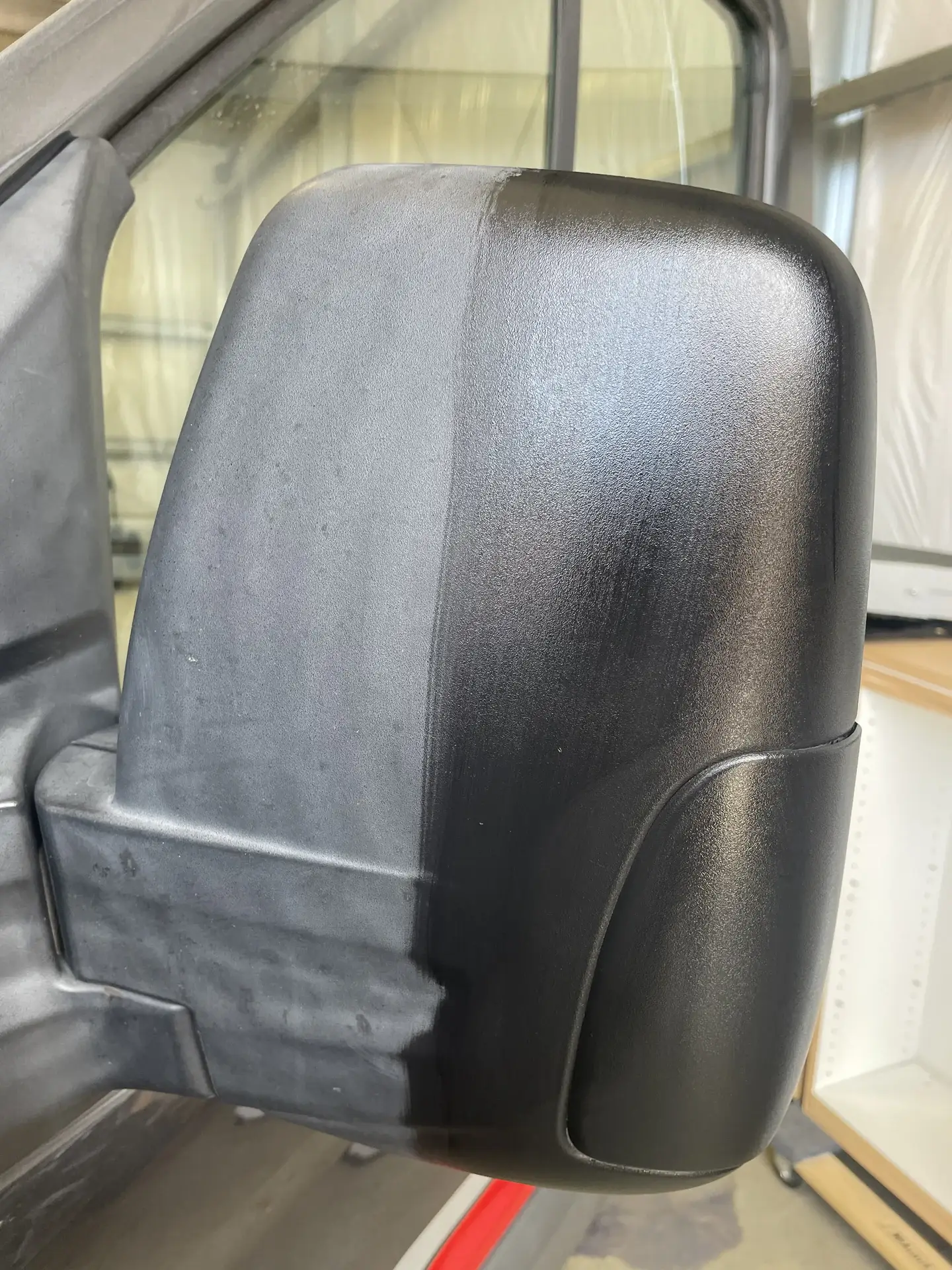
- 03Apply thin, even passesNot too thick, not too thin. Work it in with repetitive motion, into the grooves and up to where plastic meets paint.
- 04Open doors and hatchesTrim keeps going inside door openings and the tailgate. Dye the spots you cannot see with everything closed.
- 05Check every edgeGo back around the whole vehicle and wipe any dye that landed on paint before it sets.
- 06Keep it dry 6 hoursNo rain, sprinklers or washing for at least 6 hours while it cures.
Rain in the forecast? Wait. Six dry hours matter more than finishing today.
Common mistakes
Why did my trim restorer come out blotchy? Usually the prep.
When DIY trim comes out streaky or patchy, it is almost never the product. Old silicone dressing or water left in the grain keeps the restorer from soaking in evenly, and a thick coat sits on top instead of going in.
- Skipped the degreaseOld dressing blocks the dye and it wipes off unevenly.
- Plastic still dampWater in the grain leaves light patches after it dries.
- Too thickHeavy coats sit on top and smear. Thin passes, worked in.
Already blotchy? Degrease the area again and redo it with thin passes.
After it is on
What do you do after applying trim restorer? Check, wait, wax.
Go around the whole vehicle one more time before you put anything away. Dye on paint is easy to wipe off now and a lot harder tomorrow. Then keep the vehicle out of water for at least 6 hours.
- Edge checkEvery seam where plastic meets paint, doors open.
- 6 hours dryNo rain, sprinklers or car wash while it cures.
- Wax the paintOptional, but clean black trim next to dull paint stands out.
The professional option
Would you rather have it done for you? From $125.
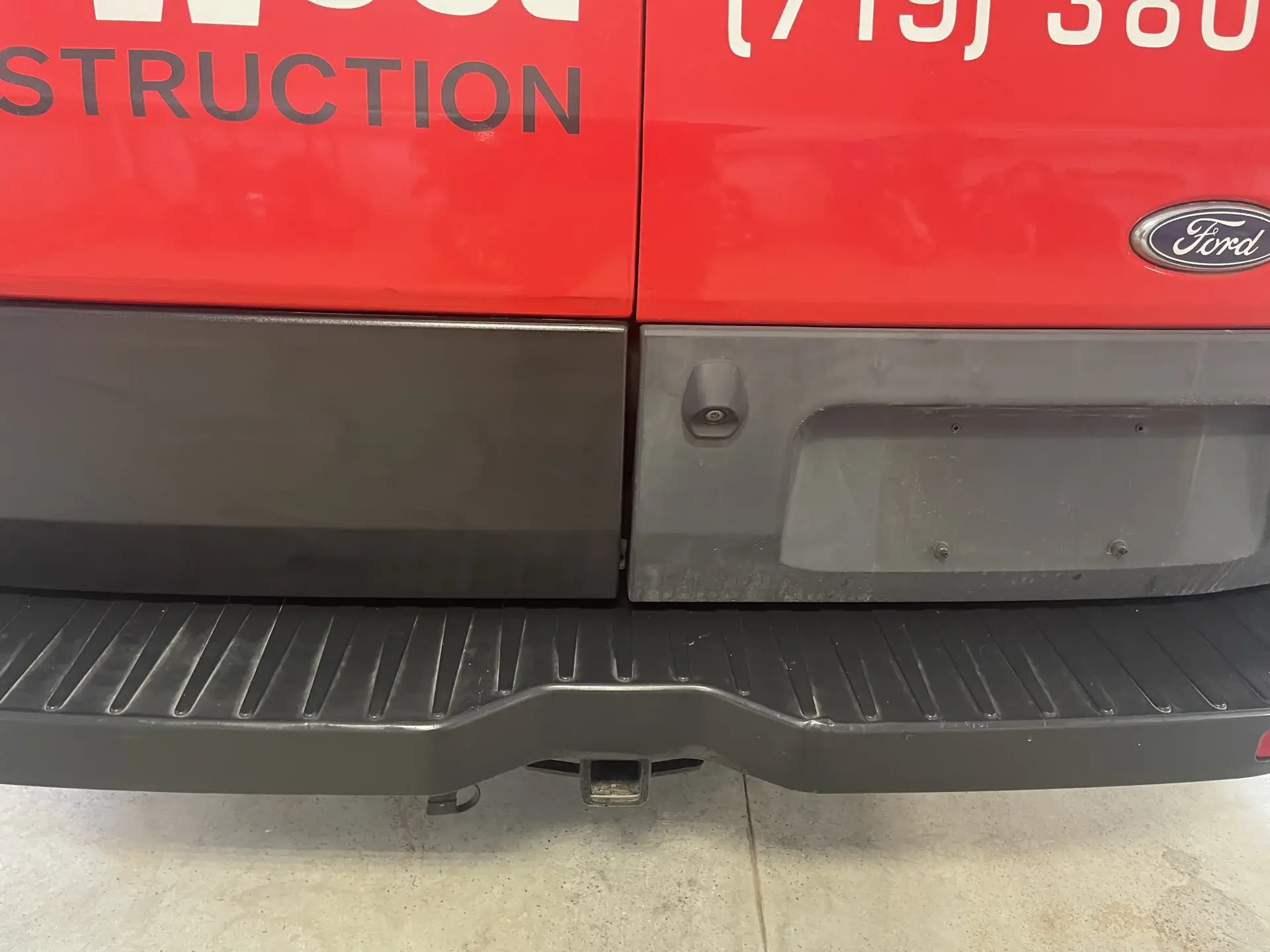
Same steps, done at 2725 N Nevada Ave in Colorado Springs with the doors open and every edge checked. Fleet vans and work trucks welcome.


Questions
Trim restoration questions, answered straight.
Stuck on something else? Call (719) 517-7220.
How do you restore faded black plastic trim?
Degrease the oxidized plastic, let it dry completely, apply a pigmented trim restorer in thin, even passes worked into every groove, check that none landed on the paint, then keep it dry for at least 6 hours.
What kind of black trim restorer should I buy?
A pigmented, dye-based plastic restorer that dries to the touch. Skip the silicone dressings sold as a shiny back-to-black look: they sit on top and wash off. Whatever you buy, the degrease and dry steps matter more than the brand.
Is a ceramic trim coating better than a plastic restorer?
A ceramic trim coat is a harder, longer-lasting layer, but it needs the same prep: fully degreased, completely dry plastic. On badly faded trim, the color has to come back evenly first or the coating locks the blotches in.
Why did my trim restorer come out blotchy?
Usually the plastic was not fully degreased or not fully dry. Old dressing or water in the grain blocks the restorer.
Why do you throw away the applicator and towels?
The pigment soaks into them and never washes out. Reused, they leave residue on whatever they touch next.
How long before the trim can get wet?
At least 6 hours.
Do silicone trim dressings restore plastic?
No. They sit on top, look wet for a while and wash off. A restorer soaks into the plastic.
Can I pay someone to do it in Colorado Springs?
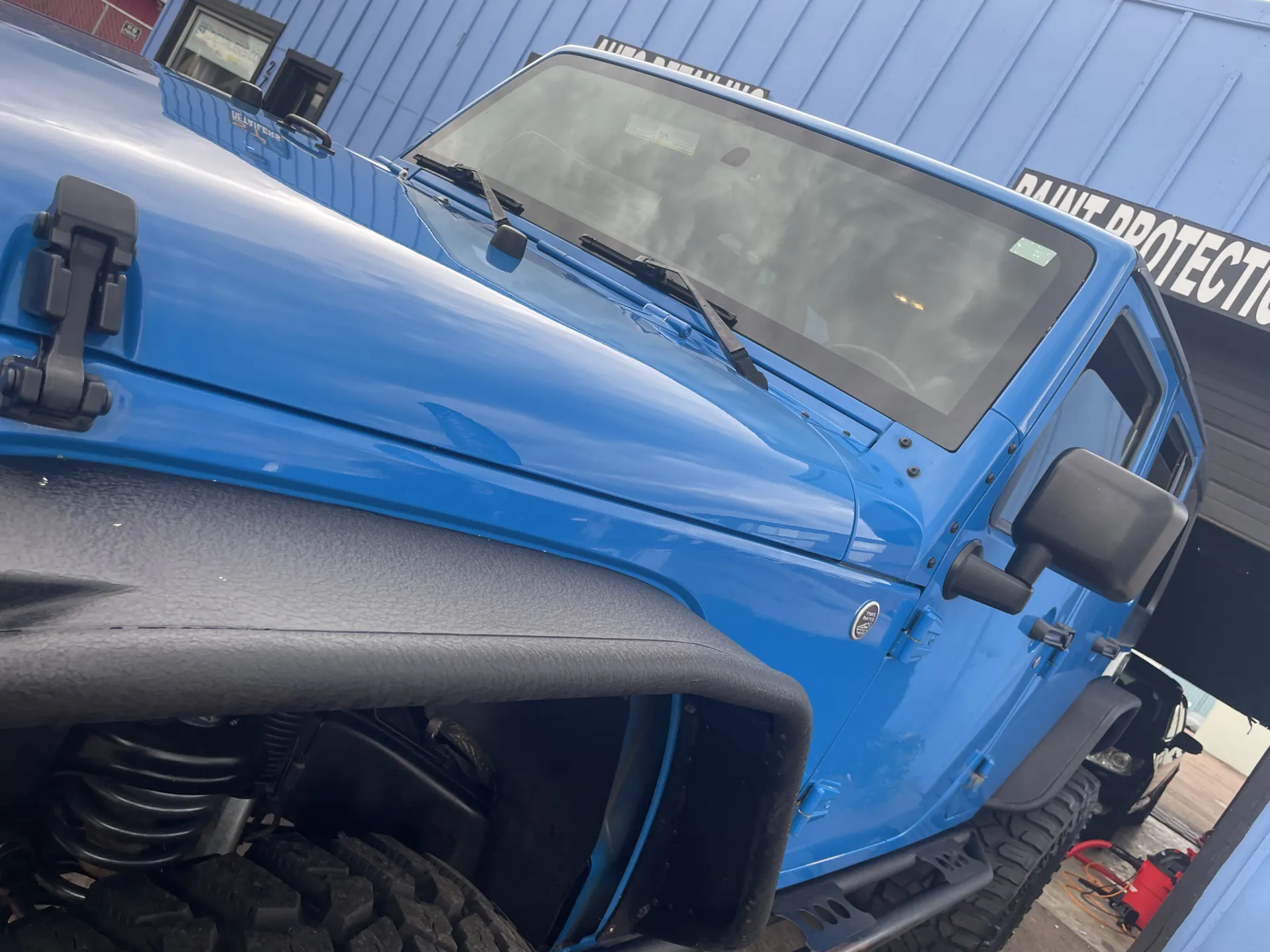
Yes. ST6 Detailers restores trim at 2725 N Nevada Ave, packages from $125.